
I am so honored...
to have a poem dedicated to me and...

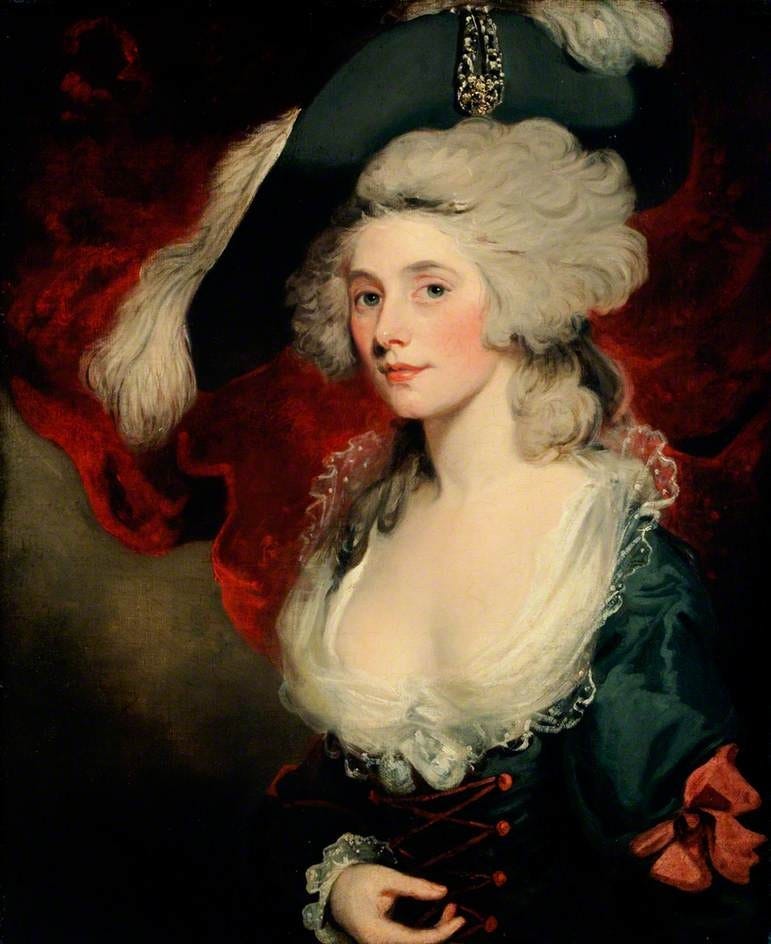
The Romantic Series ⬇️⬇️⬇️⬇️


With the Indiegogo campaign launching soon, this could not have come at a better time. Any work, but especially poetry, requires more than just the countless hours of research, composing, and editing; it necessitates the many, sometimes anonymous comments, shares, and restacks to get that viral lift, where one can say that an effort, and some measure of success, was achieved.
Alex's Almanac And its author is greatly appreciated for his poetic tribute, which recognizes the need to find readers willing to wade through their preconceived notions (fog) to find meaning in the Romantics. I assure you, it is there.
Many feel that the Romantics and those who espouse them are either sentimental or stuck in their own fog; however, I assure you that is not the case here.
To underscore this, I was recently asked who my favorite person to write for in the series was. I replied truthfully, I have no favorites. I love them all. This does not mean I do not acknowledge their flaws. There were a plethora of foibles from which to speak and write about:
Percy Bysshe Shelly eloped with Mary Godwin (Later, Shelley, author of Frankenstein), leaving Harriette, his very pregnant wife, destitute. On the other hand, he was expelled from Oxford for penning The Necessity of Atheism, and to the horror of his father, Sir Timothy, refusing to apologize or recant. Sir Timothy disinherited him. Shelley rejected the class he was born into, advocating free love and the ideals of Godwin’s Pantisocracy (no property rights, equality for all, and even marriage, which he viewed as ‘legalized prostitution’). Shelley and Mary Godwin (later Shelley) did not marry until later, due to societal pressure. Shelley was an early abolitionist and advocate for the rights of the Irish, whom he sought to convince to reject Catholicism, which did not turn out so well for him. Shelley was famous in his lifetime not so much for his poetry but for handing out blankets and soup to the poor in England and later in Italy.
John Keats- whose work only spanned five years, but whose work is still read and loved today. Keats’s humble beginnings (his father was a hostler) and rejection of the almost forced-upon him vocation (doctor) after having to work on corpses while in training underscore his need for beauty in his life. His early death from consumption robbed us all of the ‘what could have been,’ while he still gave a gift of poesy to us all.
William Blake- mystic, engraver, poet, and friend to all- sprang (like Keats) from humble roots, and even in his time, what could be termed an odd religious fundamentalist background. He later rejected all organized religion, feeling that one did not need to go to a ‘building’ to find God. Blake famously said, "Jesus is the only God. And so am I and so are you". In addition to this, he was an early advocate for ending child labor, even penning the law that would do that, an abolitionist, and was known for walking in his garden with his wife, Catharine, in the nude.
Samuel Taylor Coleridge’s opium addiction and lust for Sarah Hutchinson (Wordsworth’s sister-in-law)
Wordsworth- Wordsworth was orphaned at a very young age, and indeed, it seemed death followed him everywhere. He subsequently lost his brother John (a sea captain who went down with his ship after hitting a mountain) and three children, Catherine (age 3), Thomas (age 6), and Dora (age 42). Worse for him as a writer, he suffered tremendously from headaches, which were so debilitating that he ceased to write.
During his grand tour of the continent, he left Annette Vallon, his lover, a counter-revolutionary, pregnant, though he sent money later to care for their child.
Lord Byron’s cruelty towards many women, including his wife, Annabella, his various lovers, abandoning Claire, then pregnant with Allegra, or his dalliances with women and boys far too young for him (today he would be a registered sex offender).
These are only a few examples from the series.
But we must be fair and also recognize their courage, through not only the ideals of the pantiscoractic movement, whose primary goal was to create a society in which for humanity for all was the norm and not an aberration, but the actions they took to foment them, which underscored the theme:
Shelley, giving out blankets and soup to the homeless, and his refusal to buy or have sugar in his home, knowing it was a product of the slave trade.
Leigh Hunt, with his brother Robert, founded The Examiner, a newspaper that daily risked charges for sedition. Both Hunts spent time in jail, Leigh for as much as two years, though he continued to publish from his cell.
Mary Wollstonecraft, author of A Vindication of the Rights of Woman and mother of feminism. Her father was an abusive alcoholic who beat her mother. Wollstonecraft founded a day school for young girls, then earned a living for herself and her daughter, Fanny Imlay, writing novels and travelogues. Most think of Wollstonecraft in antiseptic terms; however, this was a woman with great passion. Her two disastrous relationships (Henry Fuseli and Gilbert Imlay) demonstrate an almost pathological need to be loved, resulting in two near-fatal suicide attempts. In today’s world, she would need a therapist specializing in the all-too-common theme of women who love too much. Yet her work, and what she stood for, lives on.
Lady Blessington, whose eidetic memory made possible her work A Journal of Conversations With Lord Byron, first published in installments and later in several volumes.
Mary Darby Robinson, lover of the Prince of Wales (later George IV), actress and poet. Her sonnets were lauded by Coleridge. Robinson later became an editor at The Morning Post and The World.
All of this is only a smattering of what is in the Romantic Series!
Why are the Romantics important now? Because we live in extreme times, and so did they. If we are to survive, such work, as the Romantic Series, supplies humanity with that much-needed mirror, through the means of poetry and thoughtful prose.
STAY TUNED FOR EVERYTHING CONCERNING THE NEW INDIEGOGO CAMPAIGN COMING SOON! SHARE! COMMENT! SUBSCRIBE AND PLEDGE!
Further Subscribe to Alex's Almanac his work is brilliant but never pedantic.
Stay tuned for the Monthly Poem Shout Out, which drops on the 15th of every month. If you want to be included in the June MPSO, DM me!
Let’s Lift Poetry through community and love!
If you have any work you'd like me to include in the next Monthly Poem Shout Out please DM me
Hello, are you a self-published author or writing through Substack?
I help authors with publishing support and book promotion to reach more readers. Let me know if you’d like help.